

Las Vegas OCD Psychiatric Treatment
Obsessive-Compulsive Disorder, commonly known as OCD, is a serious and often challenging mental health condition that can affect far more than a person’s habits or preferences. It is defined by a difficult cycle of intrusive thoughts, images, urges, or fears, followed by repetitive behaviors or mental rituals that are performed in an attempt to reduce the level of distress. For many people, OCD can quickly become exhausting, time consuming, and deeply disruptive in everyday life. It may interfere with work, school, relationships, sleep, confidence, and the ability to move through everyday routines with a sense of peace and calm.
Those closest to the individual with OCD are also affected, especially when they have to watch someone they care about become trapped in rituals, overwhelmed by uncertainty, or increasingly isolated by symptoms that are hard to understand from the outside. Professional psychiatric treatment and therapy can help patients better manage OCD, reduce symptom severity, and regain a stronger sense of control in their lives. Delve Psychiatry is widely recognized as a leading provider of OCD psychiatric treatment near Las Vegas, Nevada. We are pleased to offer comprehensive care that combines compassion, extensive clinical expertise, and individualized treatment planning.
Contact us today to schedule an appointment and start your journey toward better mental health.
For all new + existing patients please fill out our intake form or call us today at:
call 702.897.7250
Therapy for Obsessive-Compulsive Disorder
OCD is often misunderstood as simply being overly neat, particular, or detail oriented. In reality, it is a complex anxiety-related mental health condition that can cause intense distress and interfere with daily functioning. Obsessions are unwanted thoughts, fears, images, or urges that repeatedly enter a person’s mind and feel difficult to dismiss. These obsessions may focus on contamination, harm, safety, symmetry, morality, religious concerns, unwanted taboo thoughts, or the fear that something terrible will happen unless a certain action is performed. Even when a person recognizes that the thought may not be logical, the distress can still feel quite overwhelming.
Compulsions are the behaviors or mental acts a person feels driven to perform in response to obsessions. These may include repeated handwashing, checking locks or appliances, arranging items, counting, repeating phrases, seeking reassurance, reviewing memories, praying, or avoiding certain triggers altogether. While the compulsion may create short term relief, this relief usually does not last. Before long, the obsession returns, and the cycle begins again. Over time, this can consume significant energy and attention, sometimes taking up hours each day.
Clinically Significant OCD vs Occasional Worries
Clinically significant OCD is different from occasional worry or everyday routines. Many people have intrusive thoughts from time to time, and many people prefer order or cleanliness. OCD becomes a clinical concern when obsessions and compulsions cause substantial distress, interfere with important responsibilities, disrupt relationships, or consume a significant amount of time. For some patients, symptoms are visible to others. For others, the most painful rituals happen internally, through mental checking, silent repetition, or constant rumination. Both forms can be deeply distressing and deserve professional care.
How Obsessive-Compulsive Disorder Affects Patients and Loved Ones
OCD can affect nearly every area of a person’s life. A patient may struggle to leave the house because checking rituals take too long. They may avoid social events because of contamination fears or fear of intrusive thoughts occurring in public. Work or school performance may suffer because the person is consumed by mental review, doubt, or perfectionism. Relationships may become strained when loved ones are pulled into reassurance cycles or asked to participate in routines that temporarily reduce anxiety but ultimately reinforce the disorder.
Many people with OCD also experience shame. They may worry that their thoughts say something about who they are, even when those thoughts are unwanted and inconsistent with their values. This can cause isolation, secrecy, and even delays in seeking needed treatment. Loved ones may be left feeling helpless because they want to offer support but do not know whether reassurance is helping or making the cycle stronger. Over time, the heavy emotional weight of OCD can contribute to depression, panic symptoms, sleep disruption, irritability, and reduced quality of life.
OCD may also overlap with other behavioral health concerns. These coexisting conditions include anxiety disorders, depression, trauma related symptoms, or substance use concerns. When more than one issue is present, treatment becomes more complex and must be carefully tailored. That is why psychiatric evaluation is so important. A thoughtful assessment can help clarify what symptoms are present, how they interact, and what combination of Las Vegas OCD psychiatric treatment is most likely to help.
At Delve Psychiatry, OCD treatment is built around the understanding that every patient’s symptoms, history, and goals are unique. Some patients need psychotherapy that directly addresses obsessive thoughts and compulsive behaviors. Others may benefit from medication management to help reduce the frequency and intensity of symptoms. For individuals who have not found enough relief through traditional treatment options, advanced therapies such as Transcranial Magnetic Stimulation (TMS) may be considered. Delve Psychiatry provides comprehensive psychiatric services for OCD so patients can access a thoughtful, coordinated plan rather than trying to navigate disconnected options on their own.
Evidence-Based OCD Psychiatric Treatments near Las Vegas, Nevada
Psychotherapy
Psychotherapy is a foundational part of obsessive-compulsive treatment near Las Vegas because it helps patients understand the patterns that keep obsessions and compulsions active. At Delve Psychiatry, talk therapy provides a supportive and structured environment where patients can explore symptoms, identify triggers, build insight, and develop healthier responses to distress. Cognitive behavioral therapy (CBT) is often helpful for OCD because it focuses on the relationship between thoughts, emotions, and behaviors.
Therapy can also help patients address shame, uncertainty, avoidance, and the emotional exhaustion that often develops alongside OCD. For loved ones, therapy may provide useful insight into how to support recovery without unintentionally reinforcing compulsions. Psychotherapy is carefully personalized and collaborative, with the goal of helping patients develop tools that support real life progress.
Medication Management
Medication management can be an important part of Las Vegas OCD psychiatric therapies, particularly when symptoms are severe, persistent, or interfering with daily life. Certain psychiatric medications may help reduce the intensity of obsessions and compulsions, making it easier for patients to participate in therapy and practice new coping strategies. The right medication and dosage depend on the individual patient’s symptoms, history, response, and tolerability.
At Delve Psychiatry, medication management begins with a careful psychiatric evaluation. Our psychiatrist reviews current symptoms, medical history, prior treatment experiences, coexisting conditions, and patient goals before recommending a plan. Treatment does not stop once medication is prescribed. Ongoing follow up is an essential part of the process, allowing the provider to monitor effectiveness, address side effects, adjust dosage when needed, and ensure the medication plan remains aligned with the patient’s overall care.
Medication management is never treated as a one size fits all process. The goal is to use medication thoughtfully as part of a broader treatment plan that may also include psychotherapy, lifestyle support, and advanced treatment options when appropriate. Delve’s approach emphasizes education and collaboration so patients understand why a medication is being considered and what to expect throughout treatment.
TMS Therapy
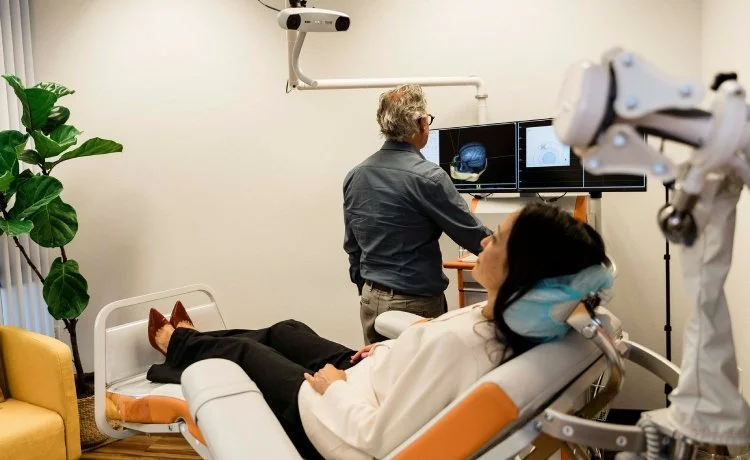
For some individuals, OCD symptoms continue despite psychotherapy, medication management, or a combination of both. When traditional methods do not provide enough relief, TMS therapy may offer another path forward. Transcranial magnetic stimulation is an off-label noninvasive treatment that uses targeted magnetic pulses to stimulate specific areas of the brain involved in OCD related patterns. It does not require anesthesia, and patients remain awake during the session.
TMS is FDA cleared for OCD and can be especially meaningful for patients whose symptoms have remained difficult to treat despite previous medication and therapeutic interventions. The therapy works by modulating activity in brain circuits associated with intrusive thoughts and compulsive behaviors. Over a course of treatment, repeated stimulation may help reduce symptom severity and improve the patient’s ability to manage obsessive thoughts and urges without relying as heavily on rituals.
TMS therapy at Delve begins with a comprehensive evaluation to determine whether it is appropriate for the patient. The team reviews mental health history, prior treatment attempts, current symptoms, and treatment goals before developing a plan. Our behavioral health practice also uses advanced TMS technology and precision focused approaches to support individualized care. This makes TMS a valuable option for certain patients who want to explore an evidence based, non medication treatment for OCD.
Our OCD Therapists are Here to Help

Patients and families frequently choose Delve Psychiatry for psychiatric treatments for OCD near Las Vegas because we combine comprehensive care with a compassionate, individualized approach. OCD can be frustrating and isolating, especially when symptoms have persisted for years or previous treatment has not produced enough improvement. Delve takes time to understand each patient’s experience and create a plan that addresses the full picture rather than focusing only on surface level symptoms.
Our team offers psychotherapy, medication management, and TMS therapy, allowing patients to access multiple forms of care through one practice. This can be especially helpful when OCD overlaps with anxiety, depression, trauma related symptoms, or other mental health concerns. Coordinated care allows the treatment plan to evolve as the patient’s needs change.
Accessibility is also a priority. Delve Psychiatry accepts a wide range of insurance plans for services such as psychotherapy, medication management, and TMS therapy, helping make high quality mental health care more attainable for individuals and families throughout the area. Our team is available to help patients understand coverage, ask questions, and move through the process with greater clarity.
Get the Support You Need for Obsessive-Compulsive Disorder Symptoms at Our Las Vegas Behavioral Health Practice
OCD can feel overwhelming, but it is treatable. With the right professional care, patients can learn to better understand their symptoms, reduce the power of obsessions and compulsions, and build a healthier relationship with uncertainty and distress. No matter if you are seeking help for yourself, or looking for support on behalf of someone you love, Delve Psychiatry offers comprehensive OCD psychiatric treatment near Las Vegas, Nevada, with a focus on compassion, personalization, and long term progress.
Through psychotherapy, medication management, and advanced options like TMS therapy, Delve Psychiatry helps patients explore care that fits their individual needs. Our team understands how disruptive OCD can be, and we are here to provide the guidance, support, and evidence based treatment options needed to move forward. To take the next step, call Delve Psychiatry at (702) 897-7250 or request an appointment online today.